
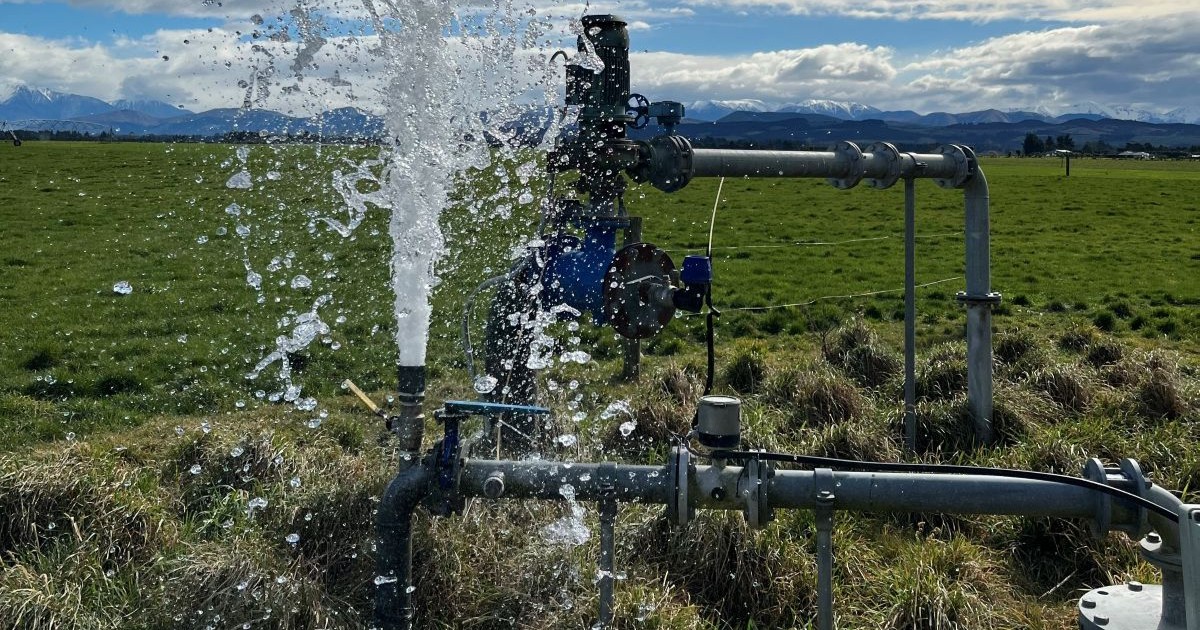
Groundwater is one of Canterbury’s most important natural resources. It supports irrigation, stockwater, drinking water, spring-fed streams and wetlands. As we approach another irrigation season, many rural water users may be asking: how are our groundwater resources looking, and what might summer bring?
The answer depends on two key factors: how much recharge the groundwater system has received over the past winter, and what weather patterns are likely to develop in the months ahead.
Much of Canterbury’s groundwater recharge occurs over the latter part of autumn and through winter. During this time, soil moisture levels are generally higher and evapotranspiration rates are lower, allowing a greater proportion of rainfall to move through the soil profile and replenish aquifers. This past winter, data from several Canterbury Plains rainfall stations with long (20+ year) records shows below-average rainfall, indicating that recharge to the groundwater system is also likely to have been below average.
Groundwater levels vary considerably across Canterbury due to differences in geology, rainfall patterns and proximity to rivers. Shallower aquifers typically respond more rapidly to recent rainfall and river flow changes, while deeper layers of the groundwater systems can take much longer to fully respond.
For some consent-holders, groundwater levels at this time of the year influence supply reliability for the coming irrigation season. Resource consents with adaptive management conditions require an assessment of groundwater levels in designated monitoring bores before the season begins: supplies are partially or fully restricted if the groundwater level is below a defined trigger level. While surface water users are used to managing around restrictions when river flows are low, it is a less common situation for groundwater users to experience supply restrictions.
Current data from a number of ECan’s monitoring bores across the region are showing levels that are below or around average for this time of year. We understand that some groundwater users with adaptive management conditions will not be able to take water this summer, or will have their supplies restricted. This is in contrast to last summer, when the majority were unrestricted.
The climate outlook from Earth Sciences NZ for the coming months suggests that Canterbury is likely to experience lower than normal rainfall and higher than normal temperatures and winds. The strong El Nino conditions that are developing do not guarantee a drought, but it increases the likelihood of one occurring. We can say with reasonably certainty that demand for water will be high, which is likely to put the groundwater system and connected surface waterbodies under pressure.
The overall picture, considering winter rainfall, the current state of groundwater levels and the likelihood of high demand for water over summer, is less than ideal. As groundwater levels recede over summer, there is a risk of well performance issues, particularly for shallower wells or those with although limited available drawdown above the pump. This risk is a separate issue from any consent-related restrictions, and depends on the depth and construction of wells.
The likelihood of warm, dry conditions over the irrigation season also raises the prospect of irrigation water demand exceeding seasonal limits on resource consents. Seasonal volumes are typically set at a level that provides sufficient water to meet full demand in nine years out of ten on average. In a one-in-ten dry year, water is still available (subject to any supply restrictions) but may not be sufficient to fully meet demand. Managing to a volume limit over a dry summer requires paying careful attention to water use and soil moisture data. It is not too late to install soil moisture probes for the coming season!

The End of the Resource Management Act: What Comes Next?
After 35 years, the Resource Management Act (RMA) is being replaced.

AquaTalks Episode 2 – Dr Jan Diettrich
Thank you to everyone who joined us for our second AquaTalks session.
What is the Theoretical Yield of Your Bore?
A step-drawdown test is one of the most effective tools available for assessing bore performance and sustainable yield.
AquaTalks Session 1 – Dr Andrew Dark
Thank you to everyone who joined us for the first AquaTalks session. We were thrilled with the turnout and really appreciated the energy, questions, and discussion that made the launch such a success.

Is Your Farm Operating as Consented?
When was the last time you compared what your resource consent(s) say with what's actually happening on your farm?

Inspiring the Future Aotearoa
Inspiring the Future is an exciting new programme for schools across Aotearoa New Zealand that has been created to broaden young people’s horizons and help challenge stereotypes that can limit their potential.

Does your Water Supply need to be registered?
Good news for many rural landowners – if your bore or drinking water supply serves fewer than 25 people, you may no longer need to register as a drinking water supplier with Taumata Arowai.
AquaTalks: Connecting Our Industry for Engaging Discussions
AquaTalks offers a unique opportunity to hear an engaging 30–45-minute presentation, followed by a flexible and convenient way to connect with industry peers. Whether you prefer the comfort of our office or the convenience of online participation, AquaTalks is designed to accommodate your schedule and preferences.

ENSO and New Zealand water resources
El Niño and La Niña represent the two extremes of the El Niño–Southern Oscillation (ENSO), a naturally occurring fluctuation in Pacific Ocean Sea‑surface temperatures that typically operates on a three‑to‑seven‑year cycle.

The importance of irrigation performance checks.
Performance checks are also important to meet Farm Environment Plan requirements associated with your property land use consent, you need to demonstrate that your irrigation system is designed and operating efficiently.

Far from an average irrigation season
The 2025-26 irrigation season has shown us once again that there’s no such thing as an average when it comes to describing the climate factors that drive irrigation demand and supply.

Do your effluent ponds leak? How do you know?
Most dairy effluent storage pond owners believe that their ponds are not leaking, particularly those that have been synthetically lined.

Measuring Water to Manage it Well
From September 2026, all water takes greater than 5 litres per second will need to be measured and recorded every 15 minutes, and the data telemetered directly to the Regional Council.

Renewing Your Resource Consent
The article I wrote for the last Canterbury Farming publication generated much interest and feedback.
Renewing Consents
The end of 2025 brought news of a huge amount of proposed change in the resource management space – too much to cover in one article.

A New Chapter for Farming Resource Consents
The major overhaul of the Resource Management Act (RMA) introduces two replacement laws: the Planning Bill, focused on enabling development and land use, and the Natural Environment Bill, dealing with environmental protection and management.

Understanding Source Water Risk Management Areas (Drinking Water Supply Protection Zones) and What They Mean for Rural Landowners
Source Water Risk Management Areas (SWRMAs) are becoming an increasingly important part of New Zealand’s drinking water safety framework, and for rural communities in particular, they can have real and lasting impacts on how land is used.
Consents – they need your attention!
Consent renewal isn't automatic. Understanding what councils are looking for and getting your application right matters more than ever.

We got off lightly, this time.
In Canterbury we’ve been fortunate to have been spared from the drought conditions that have been experienced over the 2024/25 summer in the top of the South Island and parts of the North Island, although parts of North Canterbury have been very dry at times.

Leaky effluent ponds? Prove it!
One of the drivers for proving that effluent storage ponds are not leaking, is the need for farms to operate at a minimum of Good Management Practice (GMP). Ideally the farming operation should be operating at better than GMP.
Will your irrigation consent be renewed?
Consent holders are now frequently asking questions about the renewal process and whether it is going to be possible to renew their irrigation consent.